Every house has a list. Even well-kept homes produce a home inspection report with dozens of items, and most of them are small. In the Las Vegas valley, the same problems come up again and again because the same things shape every house here: intense sun, extreme heat, very hard water, and a few building materials that were used across whole neighborhoods at once.
Here are the findings we see most often, roughly in the order a buyer should care about them, with links to the full guide for each.
1. Tile roofs: broken tiles and tired underlayment
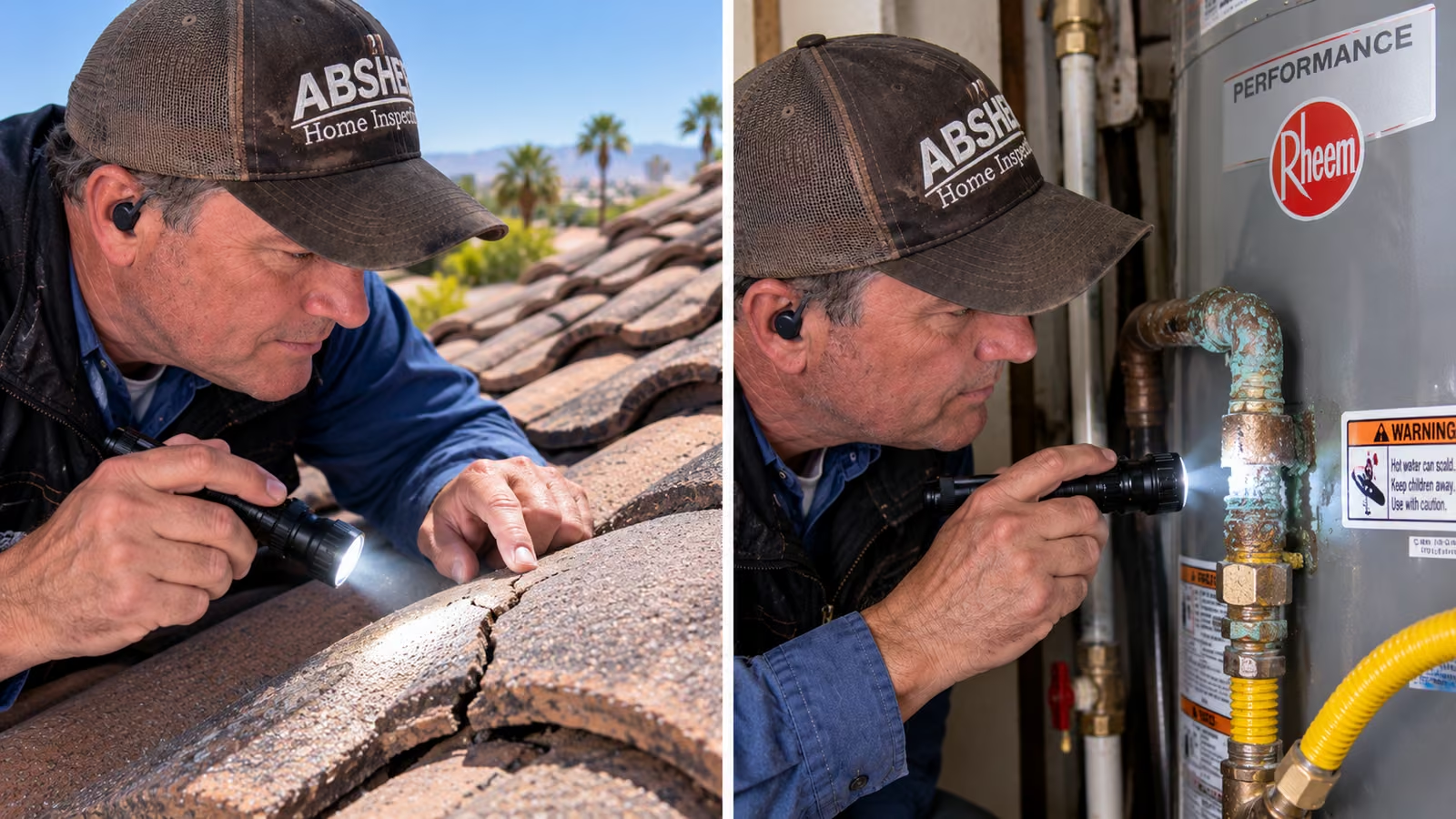
Concrete tile is everywhere in Las Vegas, and the tiles themselves last a long time. The weak point is underneath. The underlayment, the membrane that actually keeps water out, dries out and cracks after years of desert heat while the tile on top still looks fine. Cracked, slipped, and missing tiles are also common, often from foot traffic by solar installers, satellite dish techs, and painters.
A few broken tiles are an easy repair. Aging underlayment can mean lifting and relaying the whole roof. See Tile Roofs in Las Vegas.
2. Attic ductwork and the air conditioning
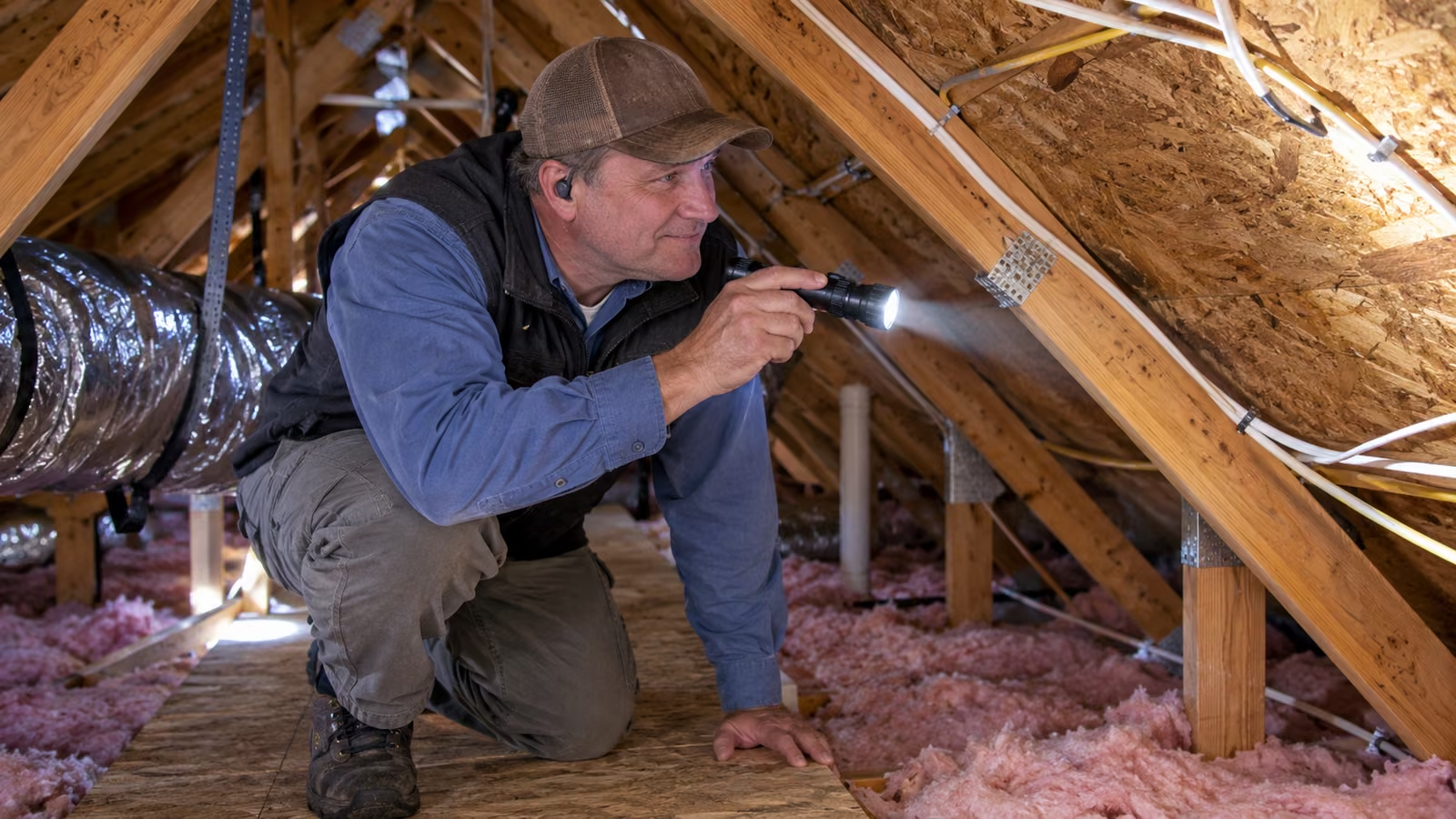
In many homes the air handler and nearly all the ductwork sit in an attic that tops 140°F in summer. Disconnected or crushed ducts, gaps at the registers, thin insulation, and clogged condensate drains are some of the most common attic findings. Air conditioners themselves work harder here than almost anywhere else in the country, so age matters. See The Las Vegas Attic in Summer.
3. Water heaters
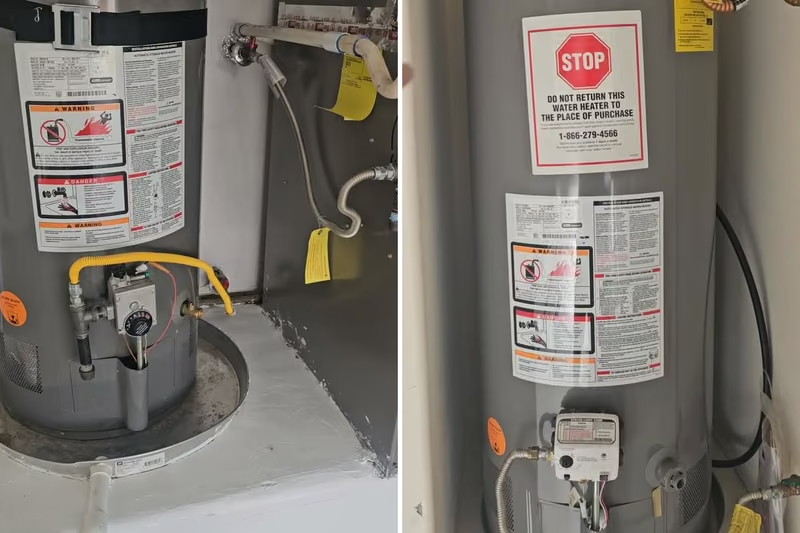
Gas water heaters show up in almost every report, usually for small but important details: a missing or loose seismic strap, no sediment trap on the gas line, a relief valve discharge pipe that’s too short or the wrong material, or a vent that isn’t connected properly. Hard water shortens their life, so age and corrosion at the fittings are common too. See Gas Water Heater Safety in Las Vegas Homes.
4. Plumbing: Kitec, hard water, and slow leaks
Homes built from the mid-1990s through 2007 may have Kitec, a composite pipe with brass fittings that have a history of failing. Elsewhere, the usual plumbing findings are leaking traps and supply lines under sinks, loose toilets, worn shutoff valves, and fixtures choked with mineral scale. See Kitec Plumbing in Las Vegas Homes and Hard Water in Las Vegas.
5. Electrical safety
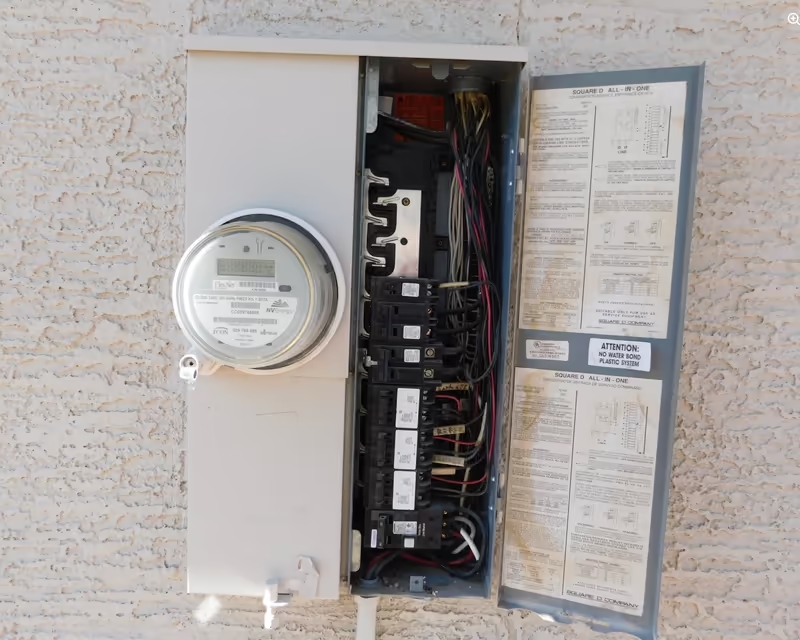
The most common electrical findings are missing GFCI protection in kitchens, bathrooms, garages, and outdoors; outlets that are wired wrong or ungrounded; and double-tapped breakers inside the panel. Older homes may have a fuse panel or a panel brand with a known history. See GFCI and AFCI Protection and Older Electrical Panels in Las Vegas Homes.
6. Stucco cracks
Nearly every stucco house has cracks, and most are cosmetic. The ones worth a closer look are wide, uneven, growing, or near windows and roof lines, where water can get in. A buried weep screed at the base of the wall is another common stucco finding. See Stucco Cracks in Las Vegas Homes.
7. Foggy windows
Dual-pane windows lose their seals in desert heat, and the result is a permanent haze between the panes. It’s mostly a comfort and appearance issue rather than a safety one, but replacing the glass in several windows adds up. See Foggy Windows in Las Vegas Homes.
8. Garage safety
The garage gets its own list: a door into the house that isn’t fire-rated or doesn’t close by itself, holes in the garage firewall or ceiling, and a garage door opener that doesn’t reverse when it should. Most are inexpensive to fix and matter for safety. See Garage Safety in Las Vegas Homes.
9. Pools and spas
A backyard pool brings its own common findings: aging pumps and heaters, leaking equipment, missing bonding, cracked decks and coping, and gates or alarms that don’t meet barrier rules. See Buying a Home with a Pool in Las Vegas.
10. Grading, drainage, and trees
Soil sloped toward the house, irrigation spraying the walls, and trees planted too close to the roof or the foundation round out the list. See Trees Too Close to the House.
How to read a long report
A long report doesn’t mean a bad house. Most findings are maintenance items or small repairs, and a good report makes the difference clear. When you read yours, sort the findings into three groups:
- Safety concerns, like gas, electrical, and fire separation issues, which should be fixed no matter what
- Big-ticket items, like a roof, an air conditioner, or plumbing that’s near the end of its life, which affect the price you should pay
- Everything else, the small repairs and upkeep any house needs
For anything in the first two groups, get a licensed contractor’s evaluation and a quote during your due diligence period, while you can still negotiate. There’s more on timing in How to Prepare for a Home Inspection in Las Vegas. Buying a brand-new home? Many of the same problems turn up there too, for different reasons. See New Construction in Las Vegas.
Common questions
Can a house fail a home inspection?
No. A home inspection isn’t pass or fail. It’s a report on the visible condition of the home on the day of the inspection, with defects and safety concerns noted and, where needed, a recommendation for a specialist. What to do with the findings is up to the buyer.
Does the seller have to fix everything on the inspection report?
Usually not. Repairs are a negotiation between buyer and seller under the purchase contract. Buyers often ask for repairs, a credit, or a lower price, and sometimes cancel within their due diligence period. Your real estate agent can explain the options and deadlines in your contract.
Do new homes have these problems too?
Some of them. New homes don’t have aging roofs or old water heaters, but they can have missed connections, disconnected ducts, damaged tiles, and unfinished work left by one of the many trades on a tight schedule.