Most of the Las Vegas valley was built after 1990, but not all of it. Neighborhoods near downtown, older parts of Henderson, North Las Vegas, and Boulder City, and scattered streets across the valley have homes from the 1950s through the 1970s. Many still have their original electrical panel.
An old panel doesn’t mean a house is unsafe. But it’s often the first thing an electrician, a lender, or an insurance agent asks about, and some older panels have well-known problems. Here’s what buyers should know.
Fuse panels
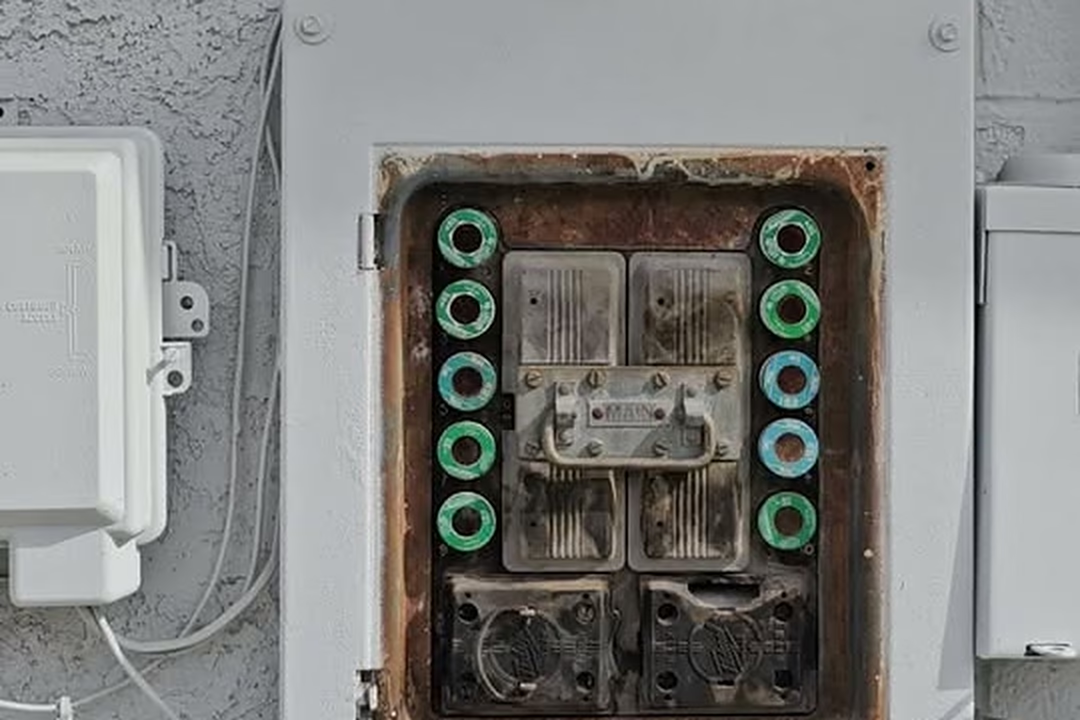
The panel in the photo is a fuse panel from one of our inspections. Each circuit is protected by a screw-in plug fuse instead of a breaker. The pull-out blocks in the middle hold cartridge fuses for the main and for large appliances. When a circuit is overloaded, the fuse burns out and has to be replaced.
Fuses work when they’re the right size. The problem is that a plug fuse of a larger amperage screws into the same socket. Someone tired of blown fuses can put a 30-amp fuse on wiring meant for 15 amps, and the wiring can overheat before the fuse ever blows. We look at the fuse sizes for that mismatch, and for other signs of tampering, like a coin or foil behind a fuse.
Fuse panels also tend to come with small electrical service, often 60 amps. That was plenty when the house was built. It may not be enough for central air conditioning, a modern kitchen, an EV charger, or rooftop solar.
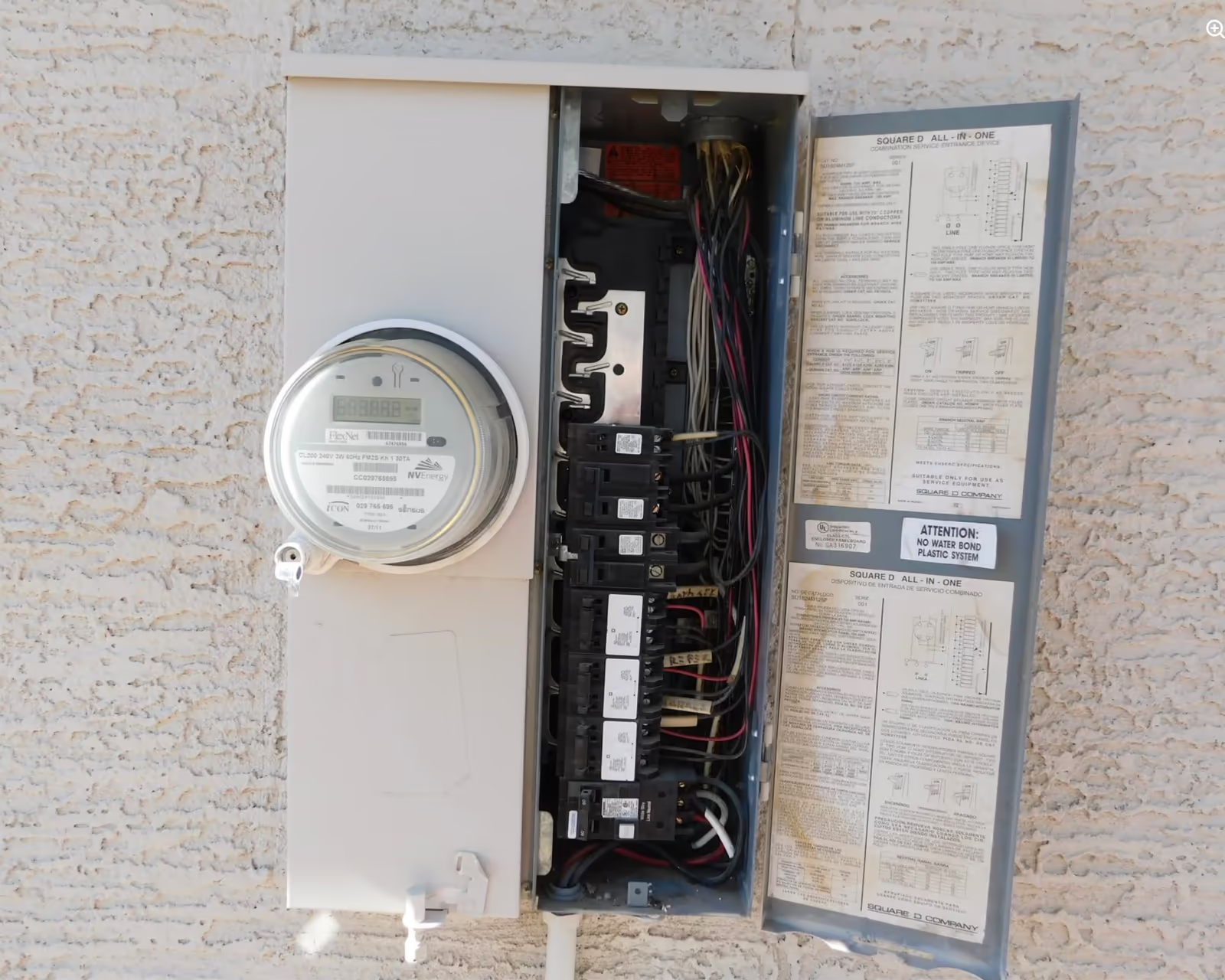
Notice the rust inside the enclosure in the photo, too. Outdoor panels in Las Vegas take decades of sun, heat, and the occasional monsoon storm. Rust, failed seals, and missing covers let water and dirt reach the electrical parts.
Federal Pacific Stab-Lok panels
Federal Pacific Electric (FPE) panels with Stab-Lok breakers were installed in millions of homes from the 1950s into the 1980s. They have a long history of reports and independent testing suggesting that some breakers may not trip when they should. A breaker that doesn’t trip doesn’t protect the wiring.
The panels are easy to identify: “Federal Pacific” or “FPE” on the cover or label, and “Stab-Lok” on the label inside the door. Many electricians recommend replacing them, and some insurance companies ask about them by name.
Zinsco panels
Zinsco panels, and similar Sylvania-Zinsco panels, have a different reputation: breakers that can overheat at their connection to the panel’s bus bar. In some cases they fuse in place and can’t trip. They’re recognizable by the name on the label and by their thin, often colorful breakers.
Other older panels, like Pushmatic, have fewer known defects but are old enough that replacement parts are hard to find. Whatever the brand, age matters. A breaker that’s been in service for 50 years is due for an electrician’s opinion.
Aluminum branch wiring
Some homes built from the mid-1960s to the mid-1970s were wired with aluminum instead of copper for the outlet and light circuits. Aluminum expands and contracts more than copper and oxidizes at connections. Over time, connections can loosen and overheat at outlets, switches, and splices.
You can sometimes spot it at the panel, where the wire is silver-colored instead of copper, or by “AL” printed on the wire jacket. The Consumer Product Safety Commission recognizes rewiring as the permanent fix, and special repair connectors installed by a qualified electrician as an alternative. Aluminum wire on large circuits, like the service entrance or an AC or range circuit, is common and a different issue from aluminum branch wiring.
Two-prong outlets
Older homes often have ungrounded two-prong outlets, or three-prong outlets that were installed without a ground wire behind them. A plug tester shows the difference in seconds. Ungrounded outlets can sometimes be made safer with GFCI protection and labeling. See GFCI and AFCI Protection in Las Vegas Homes for how that works and what older homes typically lack.
What an inspector checks at the panel
Where it’s safe to do so, we remove the panel cover and look at:
- Brand and type, including fuse panels and the brands described above
- Fuse and breaker sizes compared with the wire they protect
- Signs of overheating: discolored wire insulation, melted parts, or scorch marks
- Double-tapped breakers, with two wires under a screw made for one
- Rust, water entry, and debris, especially in outdoor panels
- Missing covers, open knockouts, and gaps where fingers could reach live parts
- Grounding and bonding that can be seen at the panel
- Wiring type, including visible aluminum branch wiring
- Clear access, since panels can’t be inspected when they’re blocked. That’s on our checklist for preparing for an inspection.
A home inspection doesn’t include a load calculation, and we don’t test every breaker. When we find a concern, we recommend evaluation by a licensed electrician.
If the report flags the panel
Get a licensed electrician’s evaluation and a quote during your inspection period, while you can still negotiate. Ask whether the panel can be repaired or should be replaced, and whether the service size will support how you plan to use the house. A panel or service upgrade needs a permit from the local jurisdiction and coordination with NV Energy, so the timeline can be longer than the work itself.
It’s also worth calling your insurance agent before closing. If your insurer has a rule about fuse panels or a specific panel brand, it’s better to know before you own the house.
Common questions
Is a fuse box illegal in Nevada?
An existing fuse panel isn’t automatically illegal. Many were installed to the code of their day. The concerns are age, condition, capacity, and misuse such as oversized fuses, and some insurance companies ask about fuse panels or decline to cover homes that have them.
Does aluminum wiring have to be replaced?
Not always. The U.S. Consumer Product Safety Commission recognizes complete rewiring with copper as the permanent fix, and special connectors (COPALUM crimps or AlumiConn connectors) installed by a qualified electrician as a repair for aluminum branch wiring.
Will a home inspector tell me if the panel needs to be replaced?
A home inspector reports the panel’s brand, visible condition, and any defects, and recommends evaluation by a licensed electrician when there are concerns. Whether to repair, upgrade, or replace the panel is the electrician’s call.