Shade is valuable in the Las Vegas valley. A mature tree can cool a yard, cut summer cooling costs, and make a house feel established. But a tree that’s planted too close to the home can cause a long list of problems. Some are cheap to fix, and some aren’t.
The roof
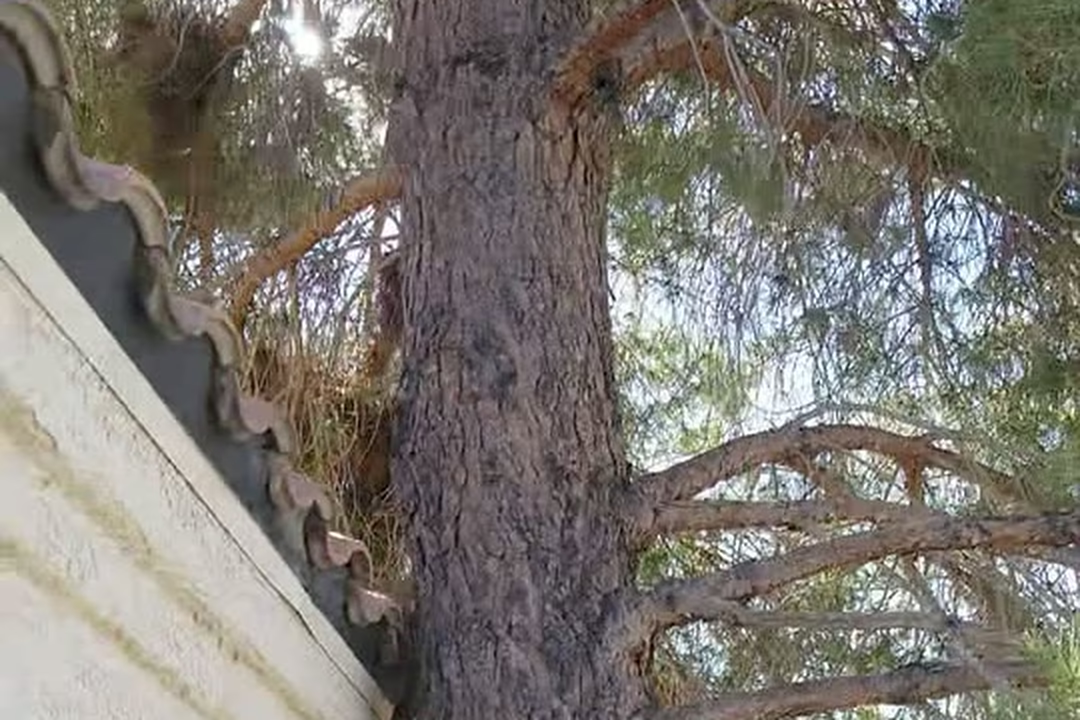
The photo above is from one of our inspections: a pine growing right against the edge of a concrete tile roof, with needles packed between the tiles.
Branches that touch or hang over a roof cause problems in a few ways:
- Wind damage. Spring wind storms and monsoon gusts whip branches into the roof. Concrete tiles are durable, but they crack when they’re struck, and branches can knock tiles out of place.
- Debris. Needles and leaves collect in valleys, gutters, and between tiles, where they hold moisture against the underlayment and block water from draining during a storm.
- Access for pests. Branches give roof rats and other animals a path onto the roof and into gaps at the eaves and vents.
The underlayment beneath the tile is what actually keeps water out, and debris and broken tiles both shorten its life. See Las Vegas Tile Roof Inspection for why that matters.
Driveways, walkways, and pool decks
Roots grow outward, often well past the edge of the canopy, and they tend to stay shallow where the water is. When they grow under concrete, they lift and crack it. A raised edge on a driveway or sidewalk is a common sign, and so is a crack that runs toward a nearby tree.
Lifted concrete is also a trip hazard, and on a pool deck it can be a sign of trouble with the pool plumbing underneath. More on that in what a pool and spa inspection covers.
Foundations, walls, and water
Most Las Vegas homes are built on a concrete slab. Large roots close to a slab can contribute to cracking, but trees more often cause trouble indirectly, through water. A tree right next to the house usually means irrigation right next to the house: drip emitters or sprinklers soaking the soil at the edge of the foundation every day. That moisture can affect the soil under the slab, wick into stucco, and keep the weep screed at the base of the wall wet. See Stucco Cracks in Las Vegas Homes for what that looks like.
Block walls are vulnerable too. Roots can lift and crack the footings of the perimeter walls common throughout the valley, and irrigation against a block wall can leave the base stained with mineral deposits.
Sewer lines
Roots go where the water is, and that includes the sewer line. In older homes, roots can get into the main line through joints and cracks and cause recurring backups. A home inspection runs water through the fixtures and drains but can’t see inside the buried line. If the house is older and has large trees near where the sewer runs, a sewer camera inspection by a plumber is worth considering before you buy.
Common trees in older neighborhoods
Older Las Vegas neighborhoods often have trees that are now much bigger than whoever planted them expected: pines, eucalyptus, ficus, and fruitless mulberry and olive trees that were planted before Clark County restricted planting them for pollen reasons. Palms usually cause fewer root problems, but they drop heavy fronds and need regular trimming. Newer subdivisions tend to have smaller desert trees, but anything planted next to a wall or the house will keep growing.
What an inspector looks for
During the exterior inspection, we note:
- Trees and shrubs touching or overhanging the roof, walls, or eaves
- Damaged or displaced roof tiles and debris on the roof and in gutters and valleys
- Lifted or cracked flatwork near trees: driveways, walkways, patios, and pool decks
- Cracks in block walls and stucco near trees
- Grading and irrigation that send water toward the foundation
- Vegetation blocking the AC condenser, vents, or the weep screed
We don’t evaluate the health of the tree or predict whether its roots will cause damage. That’s a job for a certified arborist.
If the report mentions trees
Most findings are maintenance. Trim branches back from the roof and walls, move irrigation away from the foundation, and clean debris off the roof. For a large tree close to the house, cracked flatwork, or a tree near the sewer line, get an arborist’s opinion before you decide anything. Removing a big tree is expensive, and it isn’t always the right answer.
Common questions
Will a home inspector tell me if tree roots are damaging the foundation?
A home inspector reports visible conditions, such as cracked or lifted flatwork, cracks in walls, and trees growing close to the house. Roots underground can’t be seen, so suspected root damage is referred to an arborist or other specialist.
Should I remove a large tree next to the house?
Not without advice. A certified arborist can tell you whether a tree can be pruned, needs root management, or should be removed. Removing a large tree can affect the soil around it too.
Can tree roots get into the sewer line?
Yes. Roots are drawn to moisture and can enter older sewer lines through joints and cracks. A sewer camera inspection by a plumber is the way to see inside the line.