If you’re buying a home in the Las Vegas valley built during the housing boom, there’s a plumbing product worth knowing by name: Kitec. It was installed in a large number of homes built from roughly the mid-1990s through 2007, and it has a well-documented history of failures.
Kitec isn’t a reason to walk away from a house on its own. But it is something you want to know about before you buy.
What Kitec is
Kitec is a composite water supply pipe, a layer of aluminum sandwiched between layers of plastic (often called PEX-AL-PEX), joined with brass fittings. It was marketed as a cheaper, faster alternative to copper, and builders used it widely.
The problems usually aren’t the pipe itself. They’re at the brass fittings. The brass used in many of those fittings contained a high proportion of zinc, and over time water can leach the zinc out of the metal, a process called dezincification. The fittings weaken, restrict flow as corrosion builds up inside, and can eventually leak or fail. High water temperatures and pressures can make things worse, and the pipe can also degrade where it runs hot.
The manufacturer was the subject of a class-action settlement over these problems, but that settlement’s claim deadline has passed. Today, dealing with Kitec is generally the homeowner’s responsibility.
How to spot it
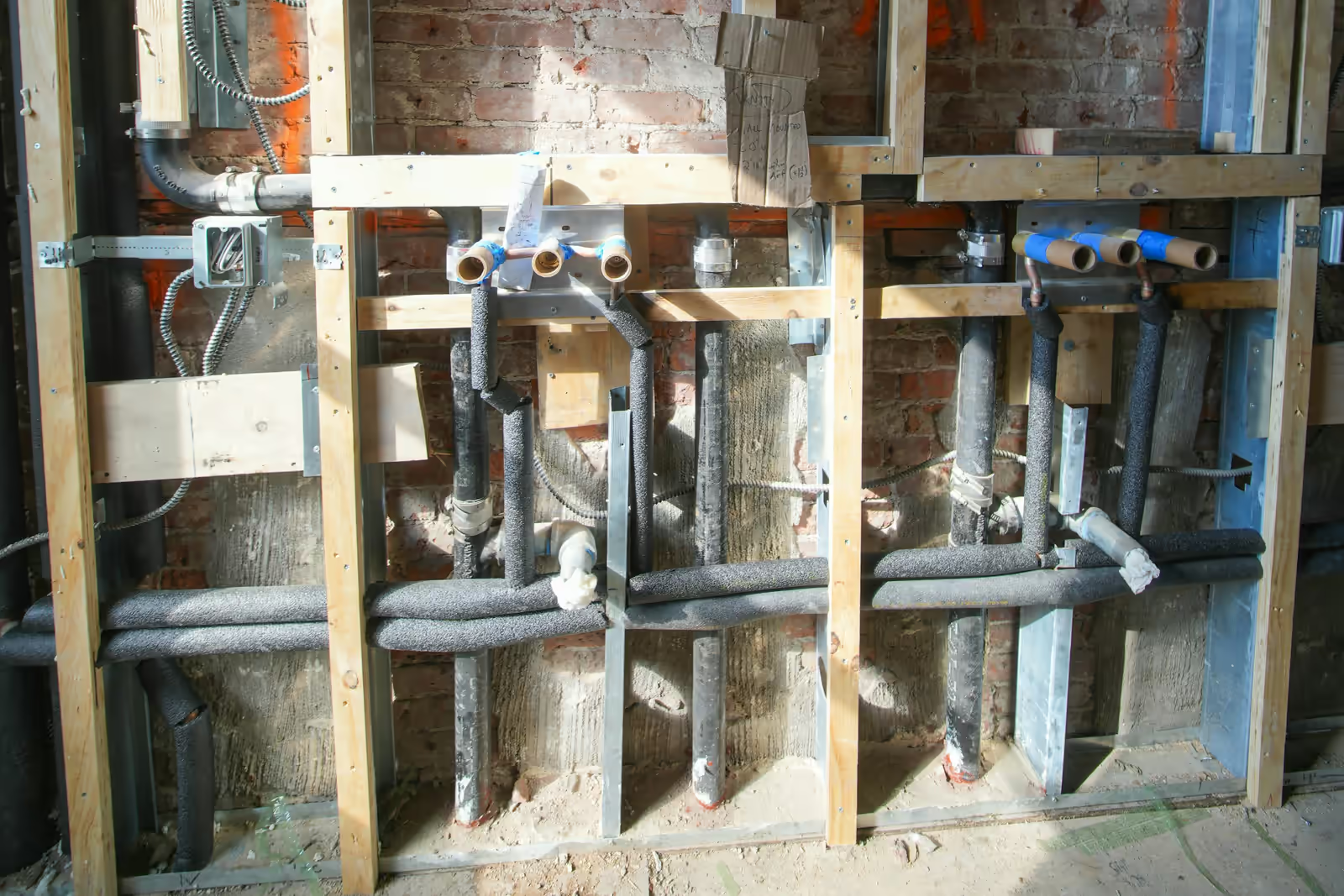
Kitec is usually easiest to see where supply pipes are exposed:
- At the water heater, where the hot and cold lines connect.
- Under kitchen and bathroom sinks, coming out of the wall to the shutoff valves.
- At the water manifold, often in the garage or a utility area.
- Near the water softener or main shutoff, where one is installed.
Look for orange pipe for hot water and blue pipe for cold, printed with the Kitec name or a related brand, connected with brass fittings. Heavy white or greenish crust on those fittings is a sign of the corrosion that leads to failure.
Not every orange or blue plastic pipe is Kitec. Several other plumbing products come in similar colors. The printing on the pipe and the fittings used are what identify it, which is why a plumber should confirm what’s there.
What a home inspection can and can’t tell you
During an inspection, visible supply piping is identified at the water heater, under sinks, and wherever else it can be seen. If Kitec is visible, the report calls it out, along with any leaking or heavily corroded fittings, and recommends evaluation by a licensed plumber.
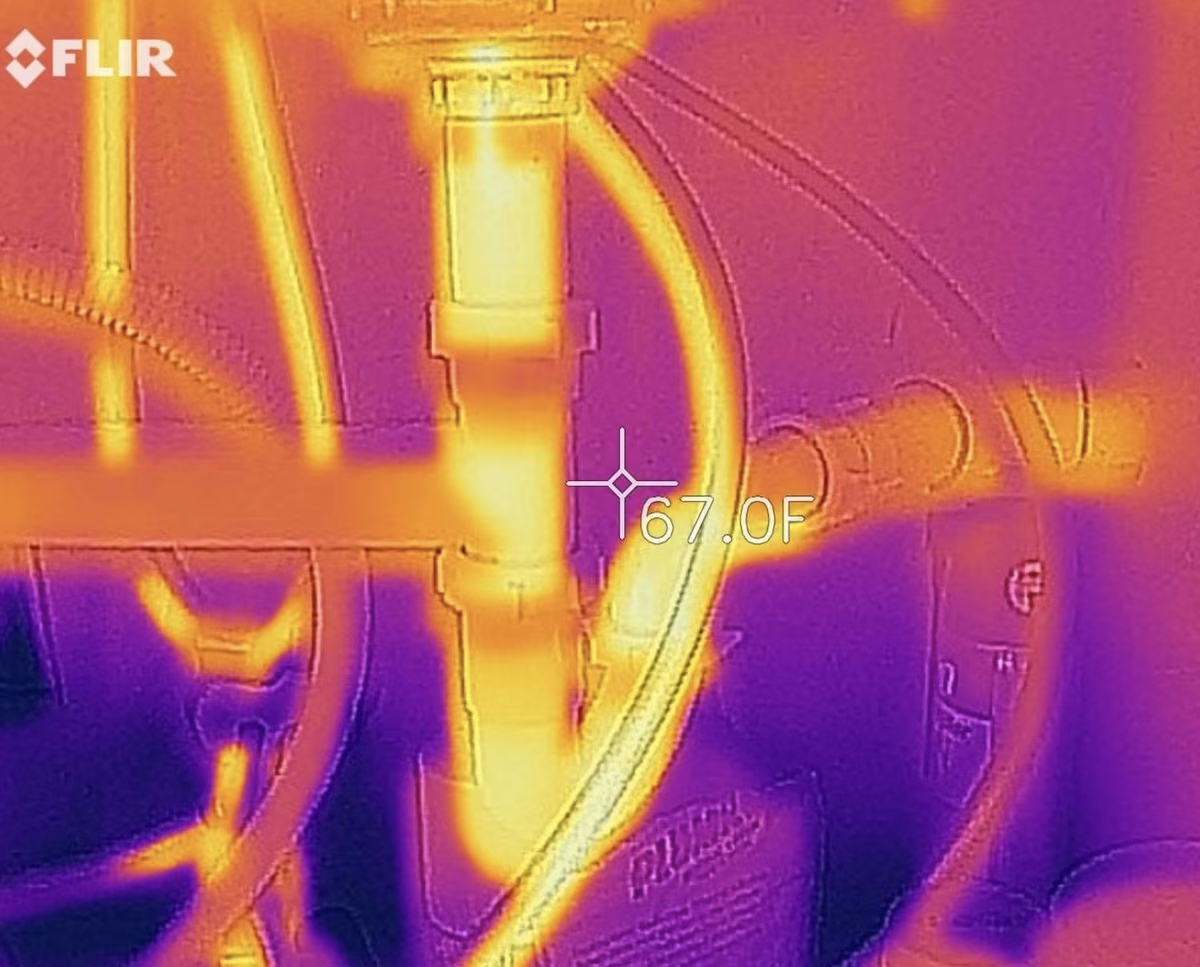
What an inspection can’t do is trace every pipe in the house. Most of the supply lines are inside walls, floors, and ceilings, so an inspection can confirm Kitec is present, but not how much of the system it makes up or the condition of every hidden fitting.
If the home has Kitec
- Get a plumber’s evaluation during your due diligence period, including an estimate for repiping if they recommend it.
- Check with your insurance company. Some insurers ask about Kitec or treat it differently when writing a policy, and it’s better to know before you close.
- Use the estimate in negotiations. A repipe is a significant expense. A documented estimate gives you something concrete to discuss with the seller, whether that’s a repair, a credit, or a price adjustment.
- Know your shutoffs. Until the plumbing is replaced, make sure you know where the main water shutoff is and how to use it.
Replacing Kitec usually means repiping the home with a different material. It’s disruptive and costs money, but it’s a known, solvable problem, and far better to plan for than to discover through a failed fitting inside a wall.
Related plumbing issues in Las Vegas homes
Kitec isn’t the only plumbing material worth knowing about in the valley. Homes from the late 1970s through the mid-1990s may have polybutylene supply pipe, and nearly every home here deals with scale from very hard water. An inspection looks at all of it together, so you get the full picture of the home’s plumbing.
Common questions
How can I tell if a home has Kitec plumbing?
Look where pipes are exposed: at the water heater, under sinks, and at the water manifold. Kitec is usually orange for hot water and blue for cold, printed with the Kitec name or a related brand, and joined with brass fittings.
Is all orange plumbing pipe Kitec?
No. Other plumbing products come in orange or red too. The printing on the pipe and the type of fittings are what identify it, so have a plumber confirm before drawing conclusions.
Can a home inspection find all the Kitec in a house?
No. A home inspection can identify Kitec where the piping is visible, but most of a home’s supply lines are hidden inside walls, floors, and ceilings. A licensed plumber can evaluate the full system.