Most Las Vegas homes heat their water with gas, usually a 40- or 50-gallon tank in the garage, a closet, or the attic. It’s one of the hardest-working appliances in the house, and installation mistakes on it can cause real harm. Some of the most important details are small. A few inches of pipe, one strap, or one turn in a fitting can make the difference.
Seismic straps
Las Vegas is in a seismic area, and Southern Nevada requires water heaters to be strapped so they can’t tip over or walk off their base in an earthquake. A falling water heater can break its gas line and start a fire.
The usual setup is two metal straps anchored to the wall framing, one in the upper third of the tank and one in the lower third, with the lower strap kept clear of the gas controls. We note missing straps, a single strap, straps that are loose or anchored only to drywall, and plumber’s tape used in place of a real strap kit.
The sediment trap
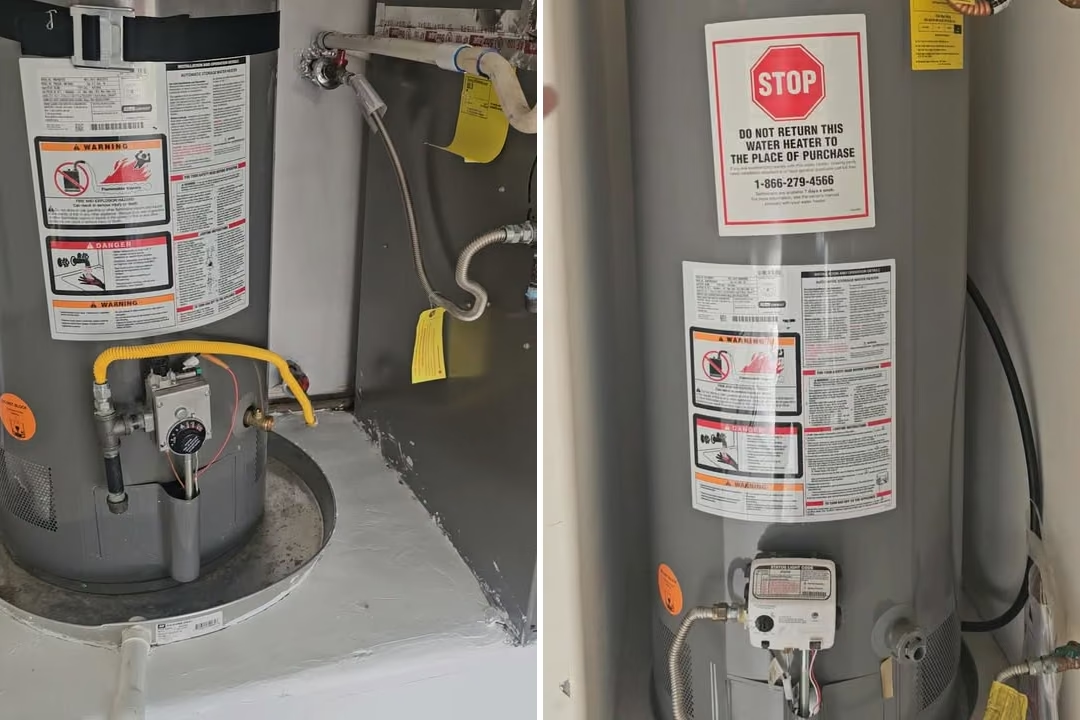
Look just below the gas valve on most installations and you’ll see a short pipe sticking straight down with a cap on the end. That’s the sediment trap (also called a drip leg). Gas lines can carry debris, scale, or moisture, and the trap keeps it out of the gas valve and burner.
It only works when the gas has to turn a corner. The supply comes down into a tee, the capped leg continues straight down, and the gas makes a 90-degree turn out the side of the tee into the appliance. Heavier debris keeps going and drops into the trap. If the trap is missing, or the fittings are arranged so gas flows straight through without turning, debris can reach the controls. This is a detail that can look right at a glance and still be wrong, so we look at how it’s piped, not just whether a capped pipe is there.
Gas connectors and shutoffs
Every gas appliance should have its own shutoff valve in the same room, where you can reach it. From the shutoff, a flexible connector usually runs to the appliance. Some jurisdictions require hard pipe the whole way, but listed flexible connectors are common in Southern Nevada, and they handle movement better in an earthquake.
We look for:
- A shutoff valve at the appliance that is accessible and not buried behind the tank
- Connectors that are kinked, crushed, or stretched, or that run through a wall, floor, or the appliance’s cabinet
- Old uncoated brass connectors. These can crack at the fittings, and the U.S. Consumer Product Safety Commission has warned that they should be replaced.
- Gas odors at fittings, which we report right away
Garage installations
Many valley homes have the water heater in the garage, often on a raised platform like the one in the photo. Gasoline vapor is heavier than air and settles near the floor, so appliances with a flame have traditionally been raised so the burner sits at least 18 inches above the garage floor. Newer tanks are built to resist igniting flammable vapors, and what’s required depends on the unit and the code in effect when it was installed. We also check whether the heater is protected from being hit by a car when it sits in the path of a vehicle.
See Garage Safety in Las Vegas Homes for the rest of what we check in the garage.
Venting and combustion air
A gas water heater burns fuel, so it needs air to burn with and a vent to carry exhaust, including carbon monoxide, out of the house. On a typical tank, exhaust rises through a draft hood on top of the heater and into a metal vent connector that runs to the flue.
Common findings include:
- Vent connectors that slope down toward the flue, or have loose or disconnected joints
- Single-wall vent pipe too close to wood framing, storage, or the ceiling
- Signs of backdrafting, such as scorching, soot, or rust around the draft hood, which suggest exhaust is spilling into the room instead of going up the vent
- Closets with no combustion air. A water heater shut in a small closet with a solid door may not get enough air to burn cleanly.
In the attic, the same checks apply, along with the drain pan under the tank. That’s also where many homes have a gas furnace. See what we check in the attic and AC system.
The relief valve and discharge pipe
Every tank has a temperature and pressure relief (TPR) valve, the last line of defense if the tank overheats or the pressure climbs too high. The valve is only as good as its discharge pipe. It should be full size, run downhill without a trap, end where hot water won’t scald someone or damage the house, and never be capped, plugged, or threaded at the end.
Related to that is thermal expansion. Many Las Vegas homes have a pressure regulator or a check valve on the incoming water line, which turns the plumbing into a closed system. Water expands as it heats, and with nowhere to go the pressure rises. That’s why many installations have a small expansion tank on the cold line above the heater. We note when one appears to be needed and isn’t there.
Age and condition
Finally, the tank itself. We record the age from the data plate or serial number, and look for rust at the fittings, water at the base, scorching at the burner access, and corrosion on the gas valve. Las Vegas water is very hard, and mineral sediment shortens a tank’s life. See how hard water affects plumbing and water heaters.
A water heater near the end of its life isn’t a reason to walk away from a house. It’s a cost to plan for, and possibly something to negotiate.
What a home inspection doesn’t cover
A home inspection is visual. It doesn’t include a gas line pressure test, a combustion analysis, or opening the burner chamber. To check the water heater, we need the gas on and the pilot lit on inspection day. That’s one of the items on our checklist for preparing for an inspection. When we find a gas concern, we recommend a licensed plumber or HVAC contractor evaluate and correct it.
One recommendation for any home with gas appliances or an attached garage: install carbon monoxide alarms outside sleeping areas, and test them. They’re inexpensive, and they’re the only way you’ll know if a venting problem develops after you move in.
Common questions
How long does a gas water heater last in Las Vegas?
Many tank water heaters last roughly 8 to 12 years, but Las Vegas hard water can shorten that when the tank is never flushed. The age is usually printed on the data plate or encoded in the serial number.
Does a home inspection include a gas leak test?
No. A home inspection is visual and does not include a gas line pressure test or a combustion analysis. Inspectors report gas odors and visible installation problems and refer them to a licensed plumber or HVAC contractor.
What should I do if I smell gas?
Leave the house, don’t operate switches or start a car in the garage, and call Southwest Gas or 911 from outside.