Rooftop solar is common across the Las Vegas valley, and more homes on the market have it every year. Solar can lower power bills in a place with long, hot summers. But it also adds paperwork to your purchase and equipment to your roof, and both deserve attention before you close.
First question: who owns the system?
Before anything else, find out how the system is owned. It changes what you’re buying.
- Owned outright. The system comes with the house. Ask for the installation paperwork, warranties, and any monitoring login.
- Financed with a loan. Some solar loans are secured against the property. Your agent and title company will need to know how the loan will be paid off or handled at closing.
- Leased, or a power purchase agreement (PPA). The solar company owns the equipment, and the homeowner pays for it or for the power it makes. These contracts usually have to be transferred to the buyer, which often means an application, a credit check, and taking on the remaining years of the contract.
Get the solar documents early in your due diligence period and read them with your agent. Lease terms, remaining payments, and transfer requirements vary widely.
What a home inspector can see
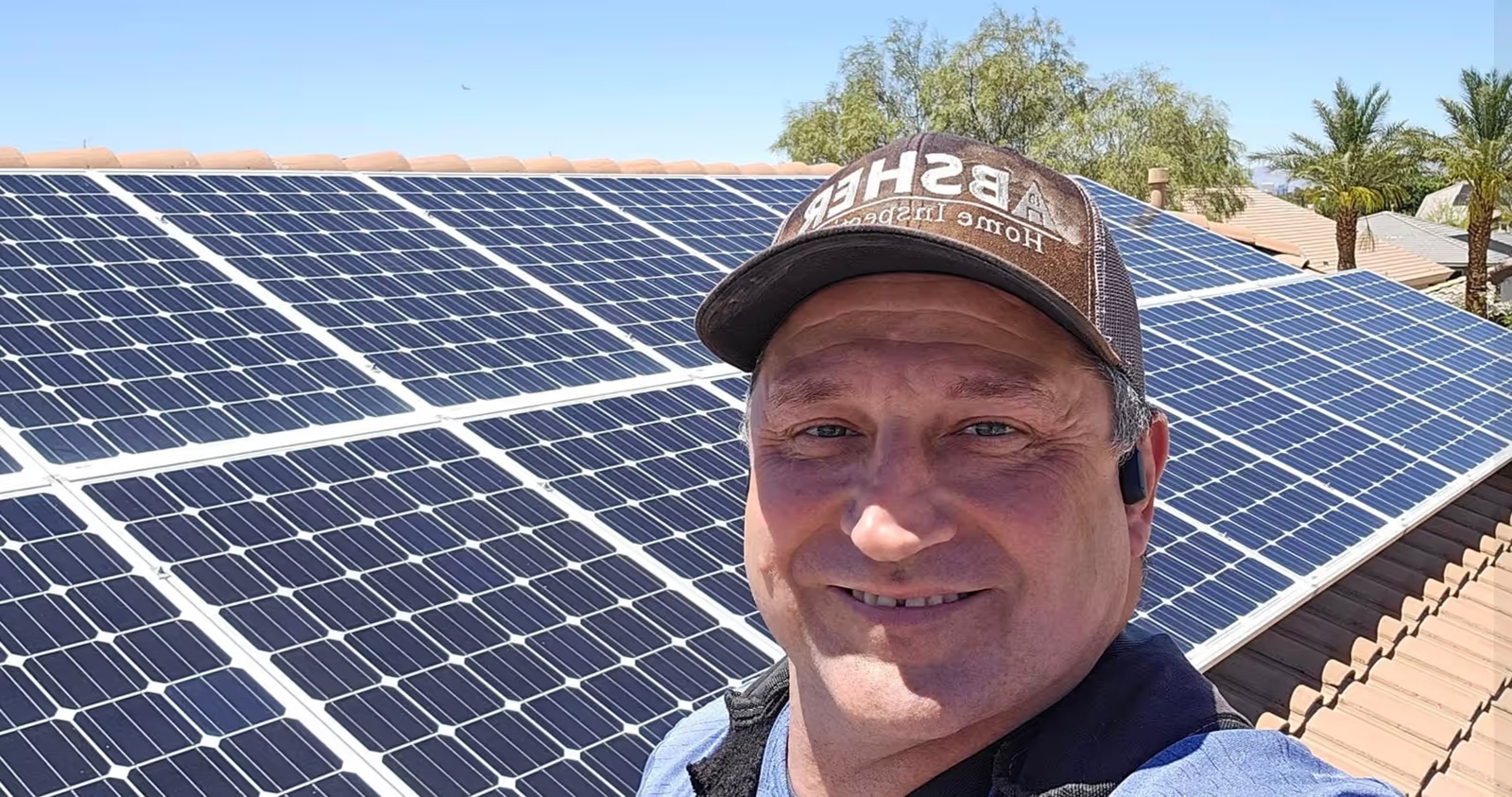
A home inspection looks at the solar system’s visible components and, just as importantly, how it affects the roof:
- Panels: cracked glass, damaged frames, and heavy debris or bird activity.
- Mounting and roof penetrations: every mounting point goes through the roof covering. We look at flashing and sealing where it’s visible.
- The roof around and under the array: cracked or broken tiles from installation foot traffic are very common.
- Pigeons and critter guards: pigeons love the shaded space under panels. Nesting debris clogs drainage and holds moisture against the roof. Mesh guards around the array edges help keep them out.
- Wiring, conduit, the inverter, and disconnects: visible damage, missing covers, and labeling.
- Whether the system appears to be operating, based on the inverter display or indicator lights where visible.
What a home inspection doesn’t cover
A home inspection doesn’t measure the system’s output, confirm it’s producing what it should, or evaluate the design and electrical integration in depth. For that, contact the installer or a solar contractor. If the seller has a monitoring app, ask for recent production history. It’s one of the best indicators of a healthy system.
The roof under the panels matters
Here’s the issue many buyers don’t think about: the panels cover part of the roof. In Las Vegas, that roof is often concrete tile over an underlayment with a limited lifespan in the desert heat. (See Tile Roofs in Las Vegas.)
When that underlayment eventually needs replacing, the panels have to be removed and reinstalled, which adds cost to the roofing project. It’s worth knowing the age and condition of the roof under the array, and asking how the roof was handled when the system was installed.
Questions to ask the seller
- Is the system owned, financed, leased, or on a PPA? Can I see the contract?
- Who installed it, and when? Are there warranties on the panels, inverter, and workmanship?
- Has the roof been repaired or replaced since installation?
- Can you share recent production history or power bills?
- Have there been any leaks around the array?
Solar can be a real asset on a Las Vegas home. Understanding the contract, the equipment, and the roof underneath it makes sure it’s an asset for you, too.
Common questions
Does a home inspection include the solar system?
A home inspection looks at the visible parts of the system and how it affects the roof: panel condition, mounting and roof penetrations, visible wiring and conduit, the inverter, and disconnects. It doesn’t verify how much power the system produces. A solar contractor can evaluate performance.
What happens to a solar lease when I buy the house?
A leased system or power purchase agreement usually has to be transferred to the buyer, which typically means applying with the solar company and agreeing to the remaining contract terms. Get the contract early and read it with your agent.