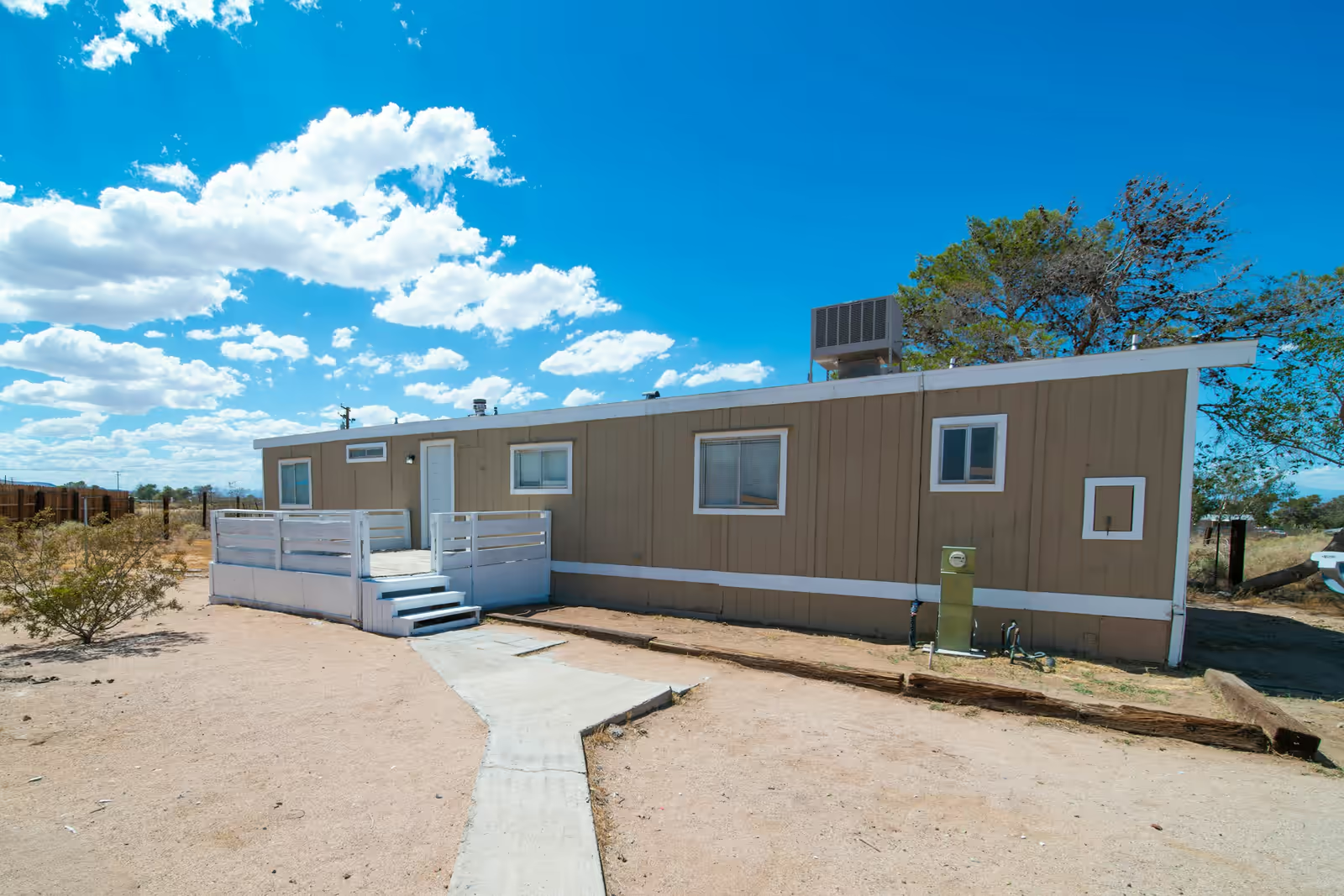
Manufactured homes are a big part of the housing picture in Southern Nevada, especially in Pahrump and rural Clark County communities like Sandy Valley, Moapa Valley, and Indian Springs, as well as in parks across the Las Vegas valley. They can be an affordable way into homeownership, often on a generous lot.
They’re also built differently from site-built houses. A manufactured home is constructed in a factory, transported in one or more sections, and set on a support system at the site. That changes what matters most during an inspection. Absher Home Inspections inspects manufactured and mobile homes throughout Pahrump and Clark County, and this is what we look at.
Mobile home or manufactured home?
The terms get used interchangeably, but there’s a real distinction. Homes built after June 15, 1976 are built to the federal HUD Code and are properly called manufactured homes. Older factory-built homes, built before that standard existed, are mobile homes.
Two identifiers confirm a home was built to the HUD Code:
- The HUD certification label, a small metal plate on the exterior of each transportable section, usually near one end.
- The data plate, a paper label inside the home, often in a kitchen cabinet, a bedroom closet, or near the electrical panel. It lists the manufacturer, serial numbers, and the wind and roof-load zones the home was designed for.
Missing labels don’t necessarily mean a problem with the home, but they can complicate financing and insurance. Replacement verification can usually be obtained, so ask the seller early if the labels can’t be found.
Underneath the home: supports, tie-downs, and the underbelly
The most important part of a manufactured home inspection is often the part people never see. Where the crawlspace can be entered safely, the inspection looks at:
- Piers and pads. Supports should be plumb, stable, and bearing on solid pads, without cracked blocks, sinking, or loose shims.
- Tie-downs and anchors. Straps and ground anchors hold the home against wind. Loose, rusted, disconnected, or missing straps are a concern in a region that sees strong desert winds.
- The bottom board. The fabric or plastic barrier under the floor (the “belly”) holds insulation in and keeps pests out. Tears, sagging, and water staining often point to plumbing leaks or animal activity.
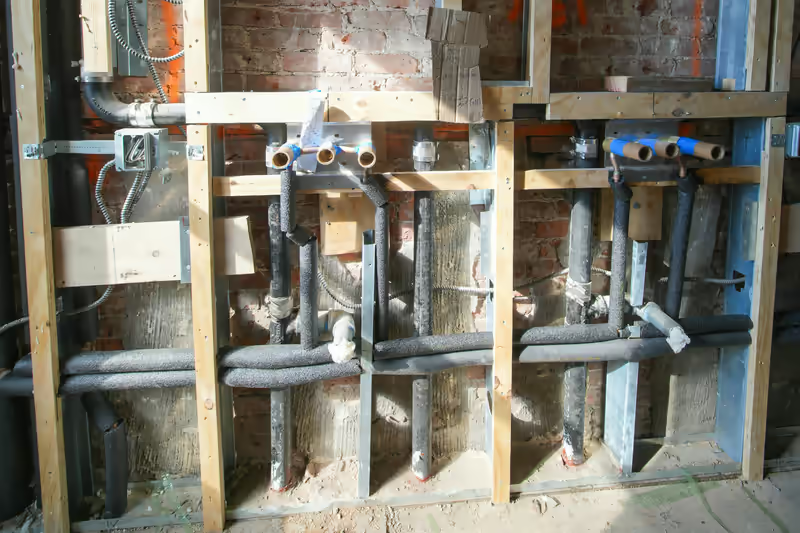
- Plumbing and ducts under the floor. Supply and drain lines run beneath the home, and in multi-section homes a crossover duct carries heating and cooling air between sections. Crushed, disconnected, or uninsulated ducts waste a lot of cooling in a Nevada summer.
- Skirting and ventilation. Skirting should be intact with ventilation openings, and the crawlspace should be free of standing water and debris.
If you’re using FHA or VA financing, the lender will commonly require a separate foundation certification from a licensed engineer, confirming the foundation meets HUD’s permanent foundation guidelines. A home inspection doesn’t replace that certification, so ask your lender early whether you’ll need one.
Roofs, coolers, and additions
Roofs. Many manufactured homes have low-slope metal roofs with seams and fasteners that need periodic sealing or coating, especially under the Nevada sun. Others have had a “roof-over,” a new pitched or coated roof built over the original. We look for rust, loose fasteners, failed seams, ponding, and the condition of flashings around vents and rooftop equipment.
Evaporative coolers. Swamp coolers are still common on manufactured homes in Pahrump and rural Clark County. We note their condition and the roof around them, since leaking coolers and supply lines are a frequent cause of roof and ceiling damage.
Additions, porches, and carports. Many homes gain site-built additions over the years. These should have their own support rather than hanging off the home, and the joint where they meet the home needs to be properly flashed. Ask whether additions were permitted, because unpermitted work can complicate a sale.
Mechanical systems
Furnaces and water heaters in manufactured homes are typically units specifically listed for manufactured housing, often with an exterior access door. We check their condition, venting, and the safety details around them. Many homes from the 1980s through the mid-1990s were plumbed with polybutylene supply pipe (and some later homes with Kitec), which has a history of failures at fittings; when it can be seen, we identify it so a plumber can evaluate it. The electrical service, panel, and visible wiring are inspected as they are in any home.
Homes built before 1976 deserve extra care. They weren’t built to the HUD Code, some used materials and wiring methods that aren’t used today, and financing and insurance can be harder to arrange.
Wells and septic: common on rural properties
Many manufactured homes in Pahrump and rural Clark County sit on properties with a private well and septic system. A standard home inspection doesn’t include well flow and water-quality testing or a septic evaluation, so plan to hire the appropriate specialists for those. They are some of the most expensive systems to repair on a rural property.
Questions to ask before you buy
- What year was the home built, and are the HUD labels and data plate present?
- Has the home ever been moved from its original site?
- Were any additions, porches, or carports permitted?
- Is the home titled as real property or personal property? A title company can explain what that means for your purchase.
- Are there service records for the well, septic, cooler, or HVAC?
For a checklist of what to line up before inspection day, see How to Prepare for a Home Inspection.
A well-maintained manufactured home can be a solid, comfortable place to live. An inspection that looks underneath, on top, and at everything added over the years helps you know exactly what you’re buying.